Christine Blasey Ford’s letter to Dianne Feinstein
She SaidChristine Blasey Ford’s letter to Dianne Feinstein was both a confidential account of an alleged high-school assault and an attempt to control how that account entered the political process. Dated July 30, 2018, it identified Brett Kavanaugh and Mark Judge, asked for confidentiality, and went only to Feinstein. When its existence became public, the letter began to circulate beyond Ford’s control; she then decided that if her identity was to be revealed, she would be the one to reveal it.
Writing and Addressing the Letter
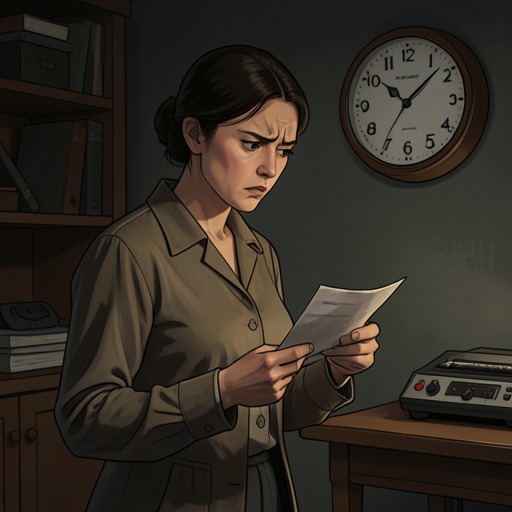
In the last week of July, Ford was in Rehoboth Beach, Delaware, with her sons, staying with her parents while her grandmother was dying after a stroke. Her parents did not know about the secret she had carried. When an aide from Anna Eshoo’s office called to ask her to write to the Senate Judiciary Committee, Ford stepped onto the porch to speak privately. She was accustomed to repeating the account, so writing it down was straightforward; deciding where to send it was not.
The aide suggested addressing the letter to both Feinstein, the committee’s senior Democrat, and Chuck Grassley, its Republican chair. Ford feared that sending it to both would make public exposure more likely. She chose Feinstein alone, relying on what Eshoo’s office had told her: that the senator would be expected to keep a constituent’s communication confidential. The letter’s destination therefore expressed a practical hope, not simply a preference about which senator should receive it.
Dated July 30 and marked confidential, the letter said that Ford was providing information relevant to evaluating the Supreme Court nominee and expected Feinstein to keep it private until they had another opportunity to speak. It identified Kavanaugh and Judge, described them as close friends and students at a local private school, and placed the alleged assault in the early 1980s, when Ford was in high school. She located it at a gathering in a suburban Maryland home with four other people present. Her account described being forced into a bedroom, the door being locked, and loud music making it difficult to call for help. She said she eventually got away to a bathroom, left the house, and went home. The letter also stated that she had not knowingly seen Kavanaugh since; she had encountered Judge once at a Safeway in Potomac Village, where he appeared uncomfortable seeing her.
Hand Delivery and a Promise of Privacy
The letter’s delivery was treated as a tightly monitored act. After the aide acknowledged receiving it, another Eshoo staff member carried a hard copy to Feinstein’s office in Washington. While Ford remained on the phone, an aide narrated the staff member’s progress and the handover. The relay made the document’s physical passage feel consequential: Ford had chosen a single recipient and was following its transfer step by step.
Feinstein then spoke with Ford by telephone. The eighty-five-year-old senator had difficulty hearing, and the two women raised their voices as Feinstein asked about the incident. Feinstein said she would keep the letter confidential and promised to be in touch. For Ford, the exchange appeared to preserve the distinction she had tried to maintain: the allegation had been given to a senator evaluating a nominee, but her identity and account were not yet for public circulation.
From Confidential Document to Public Pressure
That boundary weakened as more outsiders learned about Ford’s account. Journalists contacted her colleagues and appeared at her home; prominent women and #MeToo activists also seemed to know about the story. Ford declined to speak when reporters came to her door and, after consulting with her lawyer, Debra Katz, reiterated that she did not want to come forward. The letter’s confidentiality was thus more than a label on a page: it was tied to Ford’s effort to decide whether and when to make a deeply personal account public.
On September 12, The Intercept reported that Democrats on the Senate Judiciary Committee were trying to obtain a letter Feinstein had received. The report described it as concerning an incident involving Kavanaugh and a woman during high school and said its author was affiliated with Stanford University. The article noted that the hidden letter was taking on a life of its own. The account had become news before Ford had chosen to identify herself.
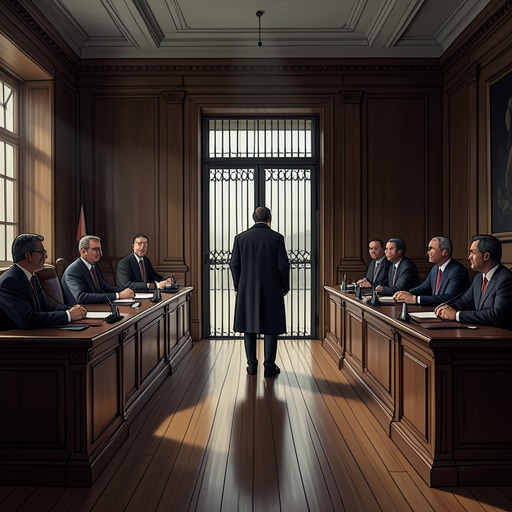
The following day, Feinstein announced that she had sent the letter to law enforcement for review. The matter went to the Federal Bureau of Investigation, which forwarded it to the White House for Kavanaugh’s background file. Kavanaugh issued a denial while the public description of the allegation remained vague. After more than a week in which Ford had been reconciling herself to silence, she believed that exposure might be only days or even hours away. The letter had moved from private correspondence into official channels and public speculation, even as its author remained unnamed.
Reclaiming the Account
Ford responded by deciding that if her identity became public, the disclosure would come from her. She drove about thirty miles from Palo Alto, California, to a restaurant in Half Moon Bay to meet Emma Brown of The Washington Post. Brown had received an anonymous tip from Ford weeks earlier and had kept in contact through intermittent calls and messages. Ford had shared portions of her account and her earlier plan to report it to Congress; Brown’s patient approach had been a source of comfort. The meeting offered Ford a way to speak on her own terms after the letter’s existence had escaped the narrow channel she had selected.
The book places this struggle over disclosure alongside other women’s different routes into public speech, without making their circumstances interchangeable. At a later gathering in Gwyneth Paltrow’s home, the women’s economic and professional differences were visible: Kim Lawson had been homeless six months earlier and was then earning ten dollars an hour at McDonald’s. Zelda Perkins and Lawson, though separated by age, occupation, and thousands of miles, described activism that had given them new authority. Lawson had filed a complaint with the Equal Employment Opportunity Commission, joined a September strike, spoken publicly, and pushed her daughter in a stroller along the march. At the same table, Rowena Chiu said she had not gone public and was still weighing the consequences of doing so; she also described the pressure of being an Asian woman in a culture that expected people not to make a fuss. These contrasts illuminate the stakes surrounding Ford’s letter: a written account could preserve a person’s words, but it could not by itself settle who controlled their circulation, the risks of speaking, or the moment of disclosure.